When to Plant Tomatoes: Use Frost and Soil, Not Zone
- Plant after frost risk, when soil and nights are warm
- Hardiness zone is the wrong calendar
- Measure soil where the roots will go
- Check nighttime air, not just daytime sunshine
- Start seed backward from the realistic planting window
- Choose a transplant by health, not flowers
- Harden off over roughly a week
- Prepare the bed with a soil test
- Plant deeply, but keep leaves out of soil
- Mulch after soil has warmed
- Containers follow the same weather rules
- Recover from an early planting mistake
- Use the final five-condition gate
Plant after frost risk, when soil and nights are warm
Plant tomato transplants after local frost danger has passed, the short-term forecast is stable, nighttime temperatures are consistently above about 50°F (10°C), and soil near planting depth has warmed to roughly 60°F (15.6°C). Hardiness zone alone cannot give the date because zones describe average winter minimums, not last frost or spring soil warmth.
Harden seedlings gradually for about a week and keep a delay or protection plan. One warm Saturday is weather. It is not a binding contract signed by the rest of spring.
Hardiness zone is the wrong calendar
USDA hardiness zones help predict perennial survival from average annual extreme minimum winter temperature. Tomatoes are frost-tender warm-season annuals. Two gardens in the same zone can have different last-frost patterns because of elevation, latitude, slope, nearby water, buildings, urban heat, and cold-air drainage.
Use a local extension planting calendar and frost-date range as the first planning tool. A frost date is a probability based on historical observations, not a guarantee. Later frost can occur, and a sheltered city garden may escape one that reaches a low rural field.
Then layer the current forecast and measured soil temperature over the historical date. The calendar gets you to the neighborhood; the thermometer finds the house.
Measure soil where the roots will go
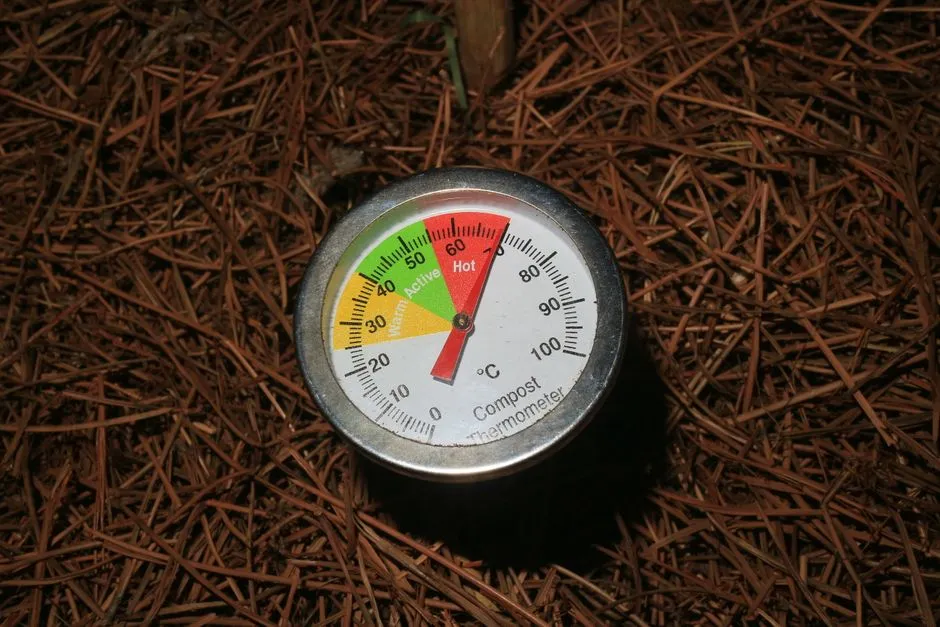
Use a soil thermometer in the actual bed, near transplant depth, at a consistent morning time for several days. A practical target is about 60°F (15.6°C). Afternoon surface soil against a south-facing wall can be much warmer than the root zone before dawn.
Cold soil slows root growth and nutrient uptake. A transplant placed early may sit stressed while a later plant establishes quickly and catches up. Black plastic or other season-extension systems can warm soil, but they require safe installation, moisture monitoring, and local guidance.
Raised beds may warm earlier and dry faster. Heavy wet soil warms slowly. Containers can warm quickly during the day and chill quickly at night. Measure instead of granting all three the same date.
Check nighttime air, not just daytime sunshine
Tomatoes can survive cool weather above freezing yet remain stressed. Consistent nighttime temperatures above about 50°F (10°C) provide a practical minimum for transplanting, while warmer nights support stronger growth. Temperatures below about 55°F (12.8°C) can slow growth, pollination, and fruit development.
Read the forecast for the coldest garden location, not the airport alone. Clear calm nights can let low spots cool sharply. Windy exposed balconies and rooftop containers have their own microclimates.
If a cold snap appears, delay planting. For plants already outside, use covers or temporary shelter rated for the expected conditions, keep fabric off foliage where the product requires support, anchor against wind, and remove or vent before overheating. A thin sheet offers limited protection and does not transform a tomato into kale.
Start seed backward from the realistic planting window
Tomato seedlings are commonly started several weeks before transplanting, but the exact lead time depends on cultivar, light, container size, indoor temperature, and seed-company guidance. Count backward from the locally realistic outdoor window, not a nationwide date.
Starting too early creates tall, crowded plants that outgrow lights and pots before soil warms. Starting a little later under strong light can produce stockier transplants that establish rapidly.
Use sterile seed-starting mix, clean containers, suitable warmth, and bright light. Thin or pot up before roots become severely bound. Move plants by leaves rather than squeezing stems, and label cultivars before every seedling becomes “probably red.”
Choose a transplant by health, not flowers
Select a short, sturdy plant with a healthy root system, deep green foliage appropriate to the cultivar, and no spots, insects, twisting, or stunting. Inspect leaf undersides and neighboring nursery plants.
Flowers and tiny fruit can make a transplant look advanced, but they do not prove it is better established. A stressed root-bound plant may flower early. Remove fruit or flowers only when local guidance recommends it; cultivar and transplant size matter.
Reject plants with suspicious water-soaked spots, target lesions, mosaic, severe distortion, wilt, or whiteflies. The early- versus late-blight guide and leaf-curl diagnostic show why one bargain transplant can bring an expensive mystery.
Harden off over roughly a week
Hardening off gradually exposes seedlings to outdoor sun, wind, and temperature. Begin in a sheltered, bright-shade location for a short period, then extend time and increase gentle sun exposure over about seven days. Bring plants in before temperatures fall outside their safe range.
Keep the root ball appropriately moist. Small cells dry rapidly outdoors, but saturated mix limits oxygen. Avoid fertilizing heavily during hardening and protect from severe wind, pounding rain, pets, and curious wildlife.
Watch for pale bleached patches from sunscald, crispy edges from wind, or wilt that does not recover after shade and moisture checks. Pause the progression until plants stabilize. The sun has been working full time for several billion years; the seedling met it Tuesday.
Prepare the bed with a soil test
Tomatoes need full sun—commonly at least six hours of direct light—with more often beneficial in cooler regions. Choose well-drained soil with good air and water movement. Test soil in advance and follow local recommendations for pH and nutrients.
Do not add lime, calcium, Epsom salt, or high-nitrogen fertilizer by habit. Excess nitrogen can promote foliage at the expense of fruit, while unneeded amendments can create imbalance. Consistent water later helps prevent blossom-end rot, which is often a calcium-delivery problem rather than calcium-poor soil.
Rotate tomatoes and related crops where space allows, remove volunteers, and clean supports. Rotation does not eliminate airborne disease, but it can reduce residue-associated problems.
Plant deeply, but keep leaves out of soil
Tomato stems can form roots along buried sections. Remove lower leaves cleanly and set a healthy transplant deeper than it grew, or lay an overly tall stem in a shallow trench so roots remain in warmer upper soil. Do not bury foliage or sharply bend a brittle stem.
Water the planting hole and root ball thoroughly. Backfill gently and press enough to remove large air pockets without compacting the bed. Install stakes, cages, or trellises at planting so later work does not cut roots.
Space according to cultivar habit and support system. Determinate, indeterminate, dwarf, and container cultivars need different room. Follow the seed source and local extension instead of one universal spacing copied from a commercial field.
Mulch after soil has warmed
An organic mulch can conserve moisture, reduce soil splash, and suppress weeds. If applied while soil is still cold, it can slow warming. Wait until conditions suit the region, then keep mulch away from the stem.
Use clean material with known history. Manure, compost, hay, or grass clippings contaminated with persistent herbicide can severely distort tomatoes. When uncertain, obtain source records or conduct an extension-recommended bioassay before spreading.
Water at the base. Drip or soaker irrigation reduces leaf wetness. Check root-zone moisture rather than delivering daily shallow sips; both drought swings and saturation stress roots.
Containers follow the same weather rules
A container does not exempt a tomato from frost. It does offer mobility: move it into a protected frost-free place when cold threatens, provided lifting is safe and the plant does not enter a living area after pesticide use contrary to the label.
Choose a sufficiently large container for the cultivar, with unobstructed drainage and quality potting mix. Garden soil in a pot can compact and drain poorly. Install support early and plan for the mature top weight in wind.
Dark pots heat in sun and small volumes dry quickly. Check moisture frequently without assuming frequent means automatic. A self-watering reservoir must be operated according to its design.
Recover from an early planting mistake
If plants meet cold but not frost, assess after several warm days. New growth may recover even if older leaves bronze or curl. Avoid forcing growth with excess fertilizer. Keep soil evenly moist and delay pruning until living tissue is clear.
Frost-damaged tissue can become water-soaked, black, and soft. If the main stem is killed, replacement may be faster than recovery, depending on season. Do not use fruit from frost-killed vines for canning.
When frost is forecast before planting, the best rescue is gloriously simple: keep the seedlings indoors under suitable light for another night. Gardening rarely offers such a cheap second chance.
Use the final five-condition gate
Transplant when all five are true:
- Local frost risk is acceptably low.
- Forecast nights stay above about 50°F (10°C).
- Soil near planting depth is around 60°F (15.6°C).
- Seedlings are healthy and hardened.
- Protection and watering are ready.
If one condition fails, wait or use a properly managed season-extension system. Tomatoes do not award extra fruit for calendar bravery. They reward warm roots, steady moisture, healthy leaves, and a gardener who knows that “zone 6” is not a date.